
Awamaki x Bryana Bibbs
A collaboration based on storytelling and process
Reflections on Awamaki and the female artisans
On June 18, 2026, I had the incredible opportunity to visit Awamaki during the "Reclaiming Value: Sacred Valley Design Immersion" in Cusco, Peru, led by MurMur Ring and Empathy. I have always wanted to visit Peru to see the Andean weavers and the ways they have preserved their ancestral knowledge of natural dyes, spinning, and backstrap weaving. I was thrilled to experience the exceptional work of the cooperatives and Awamaki.
As I write this, I find it challenging to find the right words to describe my visit to the artisan cooperative. Words like "amazing," "life-changing," "magical," and "ethereal" come to mind, as I've heard them used by others. Now that I've experienced it myself, I can definitely relate. However, after reflecting on my time there over the past few months, the word that stands out to me—and that I would add to that list—is "generous." I'll elaborate on that later.
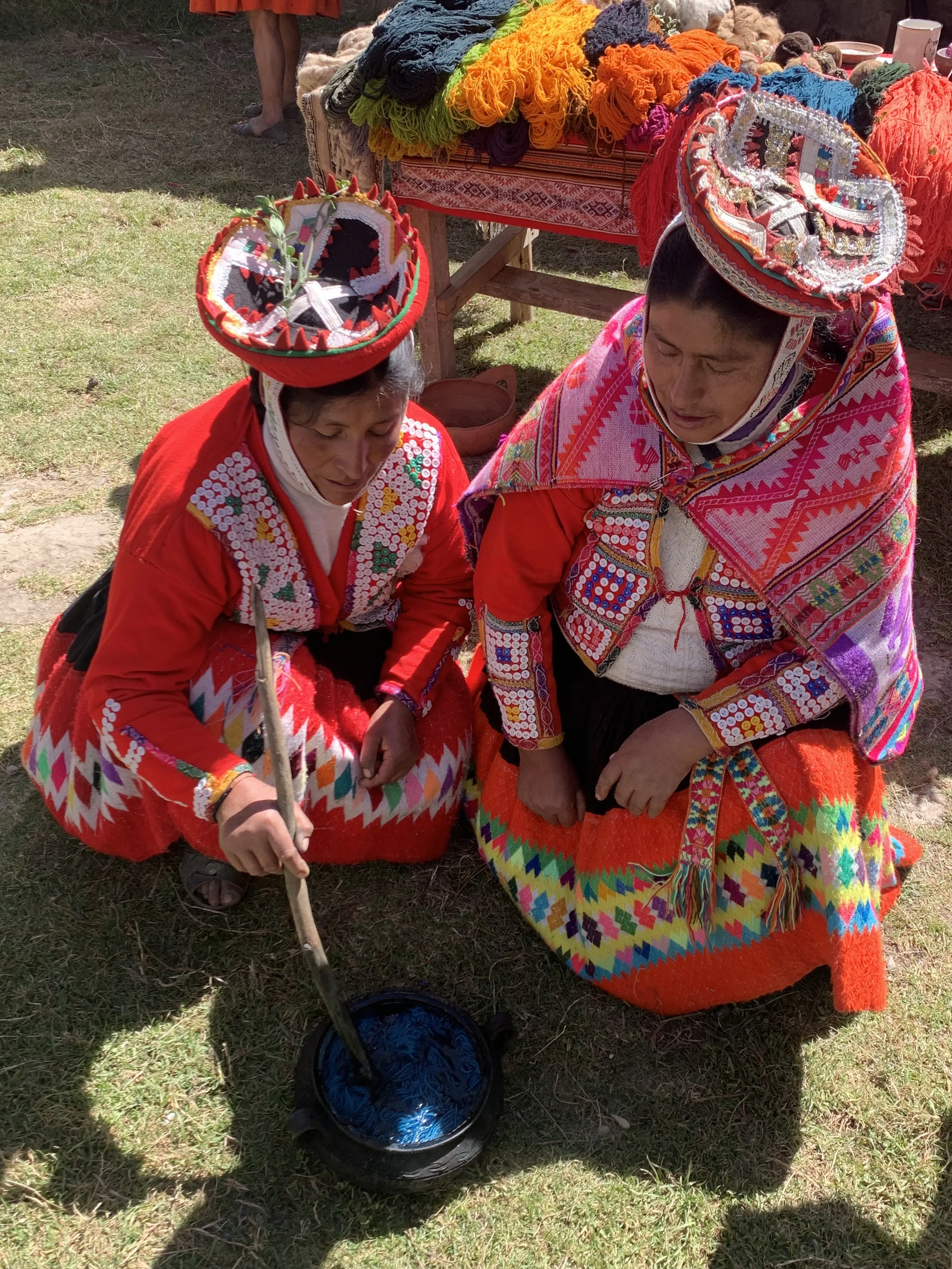
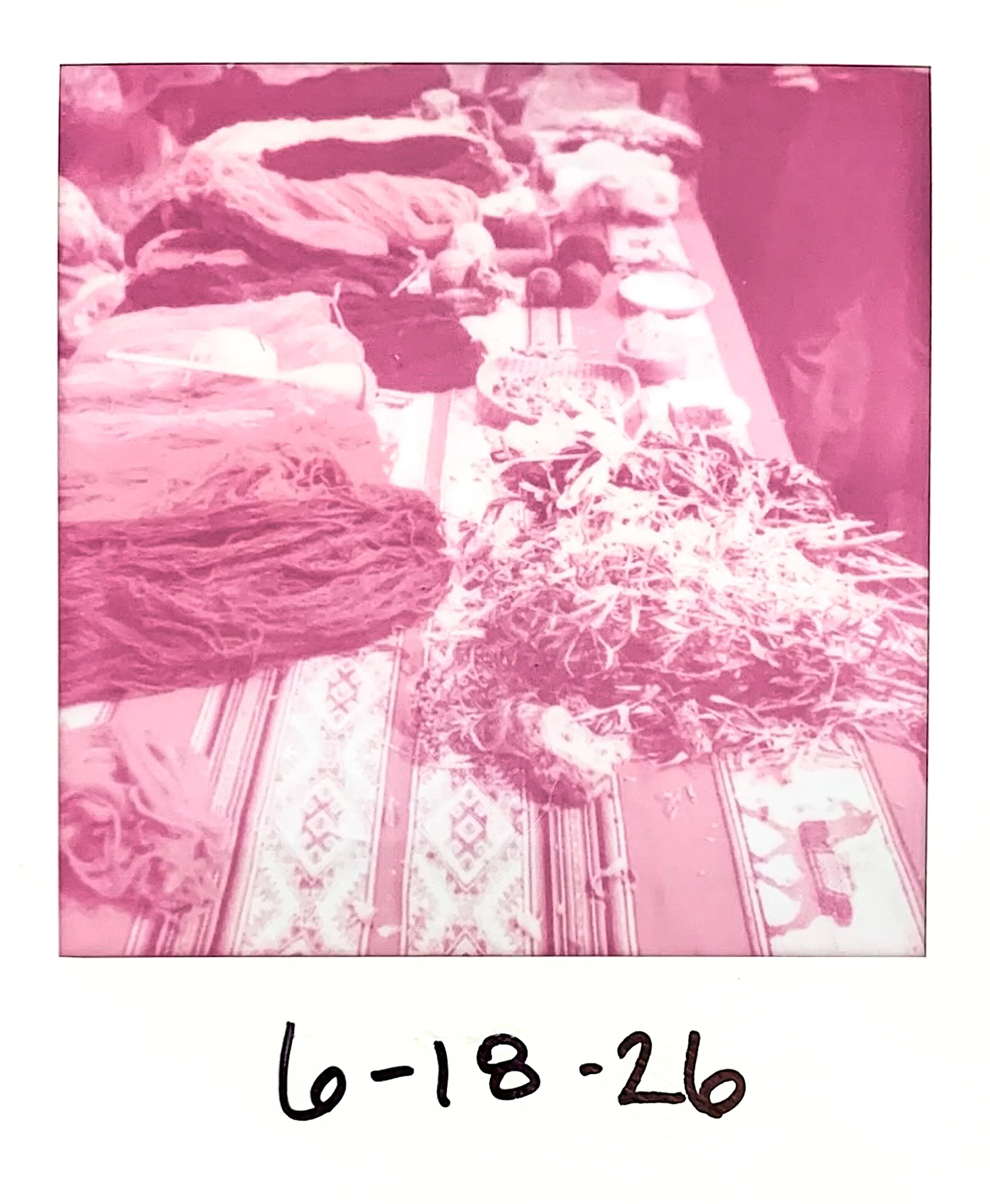
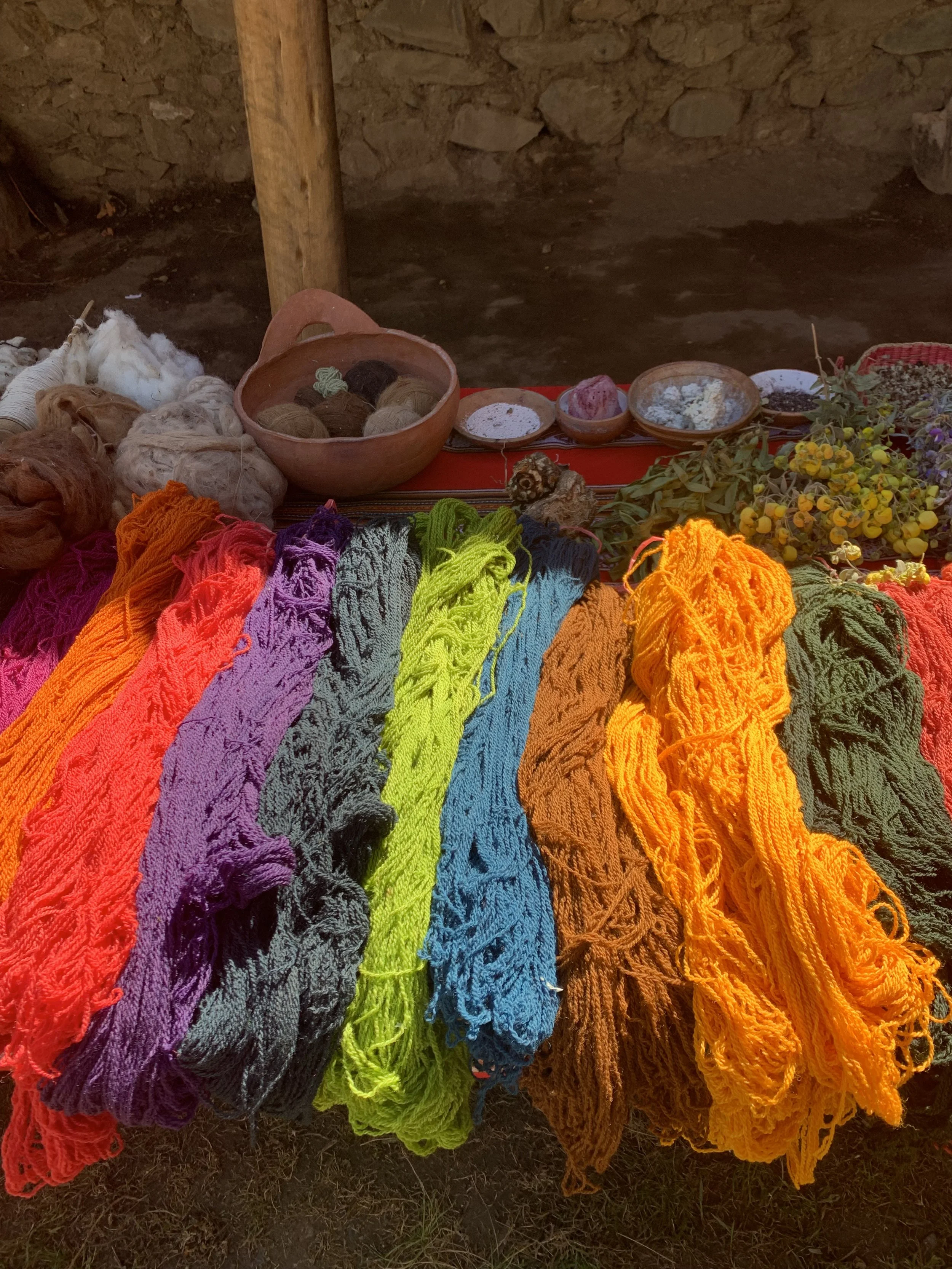
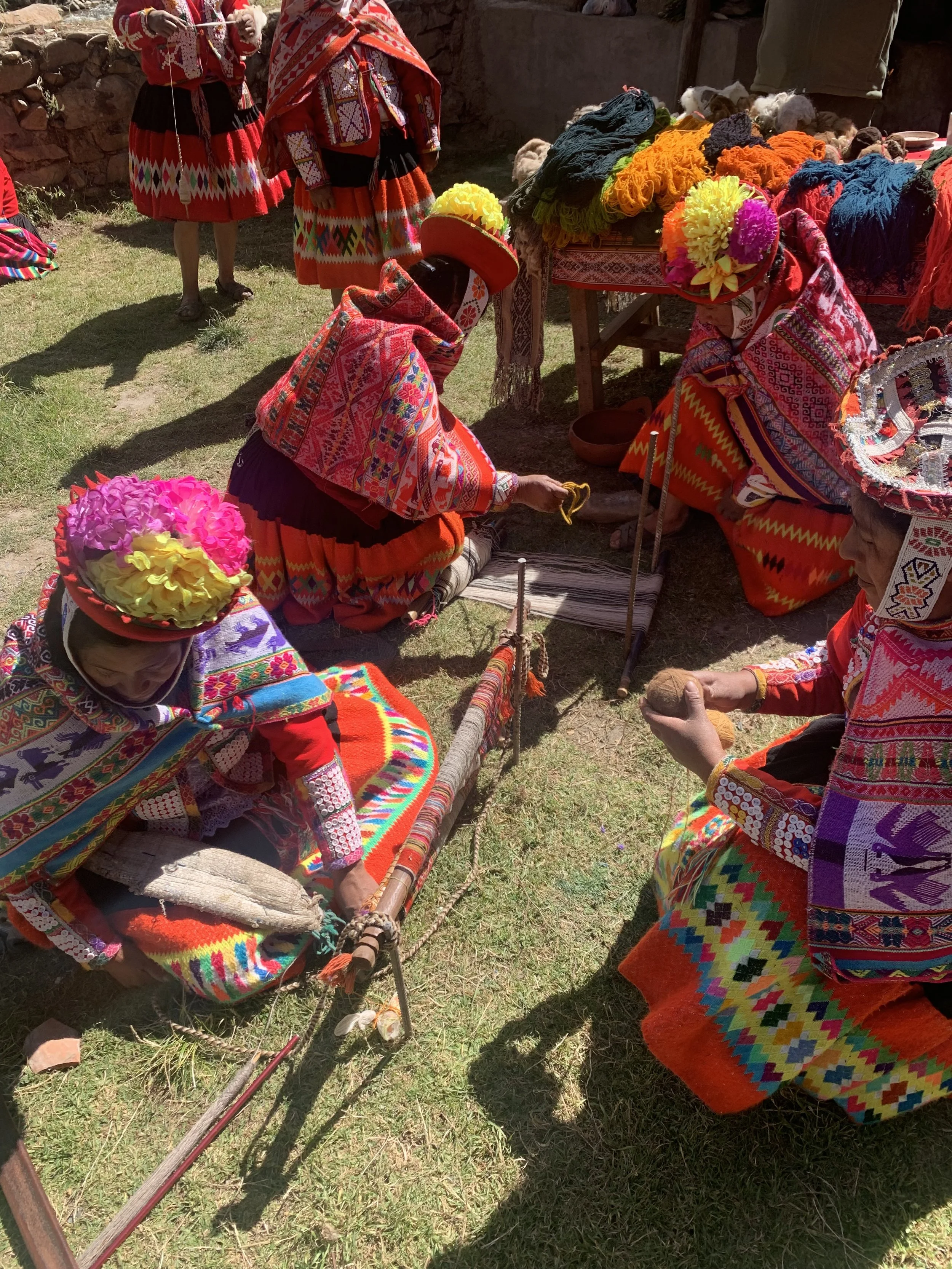
Our Immersion cohort was split into two vans and drove on narrow roads surrounded by colorful landscapes, rivers, and mountains. When we arrived at the Puskariy Tika cooperative in Huilloc Bajo, we were immediately greeted with qantuta floral necklaces and seated in a semicircle with tea. I was in awe of everything that followed. Our cooperative leader and my weaving and spinning guide, Virginia (pronounced veer-HEEN-ee-ya), walked us through the process. She shared amazing stories about her experiences while women in the cooperative prepared for demonstrations. Virginia also discussed the work and materials used to weave on the backstrap loom, and we even got the chance to feel some of the plants, minerals, and wool used to create these textiles.
I was particularly struck by the vibrancy of the naturally dyed yarn, especially the Q’era flower used to make the blue natural dye seen in the images. Virginia handed me the drop spindle (pushka) to spin with alpaca fiber, and our Awamaki guide, Mia, enthusiastically informed Virginia that I am a spinner and a weaver. Virginia looked at me and smiled excitedly, but after observing the work these women do, I felt unworthy of those titles. Virginia had learned these processes when she was six years old. Making these textiles is physically demanding and requires patience. The work includes shearing sheep and alpacas, foraging for plants, minerals, and insects to use as dyes, cleaning the fiber and wool with the root Sachaparaqay, spinning and k’antiy (plying) the fiber on the pushka, dyeing the yarn (Q'aytu), waiting for it to dry, having a second person helping wind the warp (allwiy), dressing the loom (awaqaspi)—which is a portable, non-mechanical loom made with yarn, stakes, bones, wood, a very large rock, and the weavers body weight keeping the tension of the warp—and finally weaving with weft (mini) creating designs (pallay) based on memory and the weaver's story, is absolutely incredible—especially given the fact that this is all ancestral knowledge that has been passed down and preserved. The fact that they shared these generational processes with us and explained them so thoroughly is so generous. Not to mention that, even though we were strangers, they welcomed us into their cooperatives without judgment.
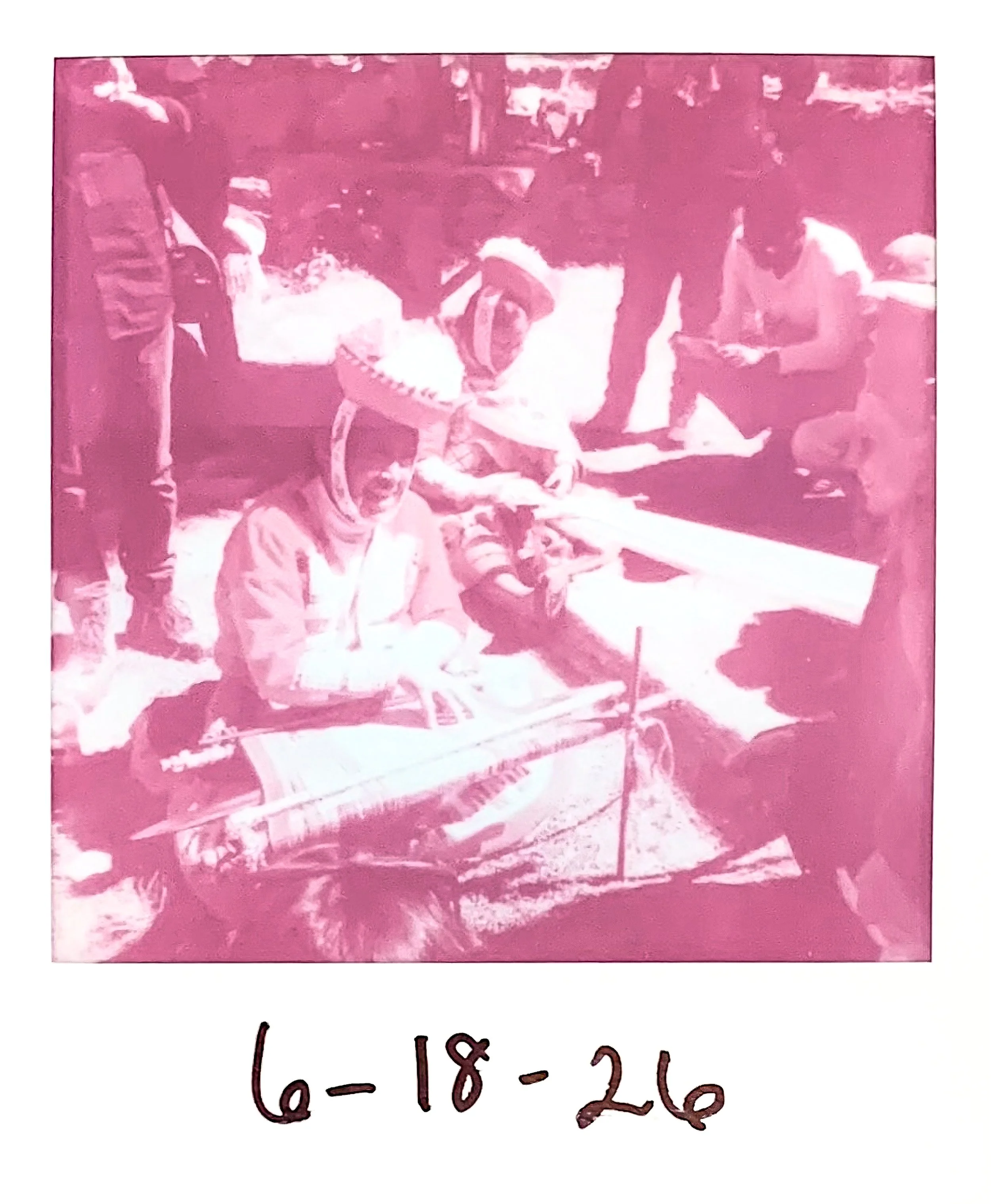
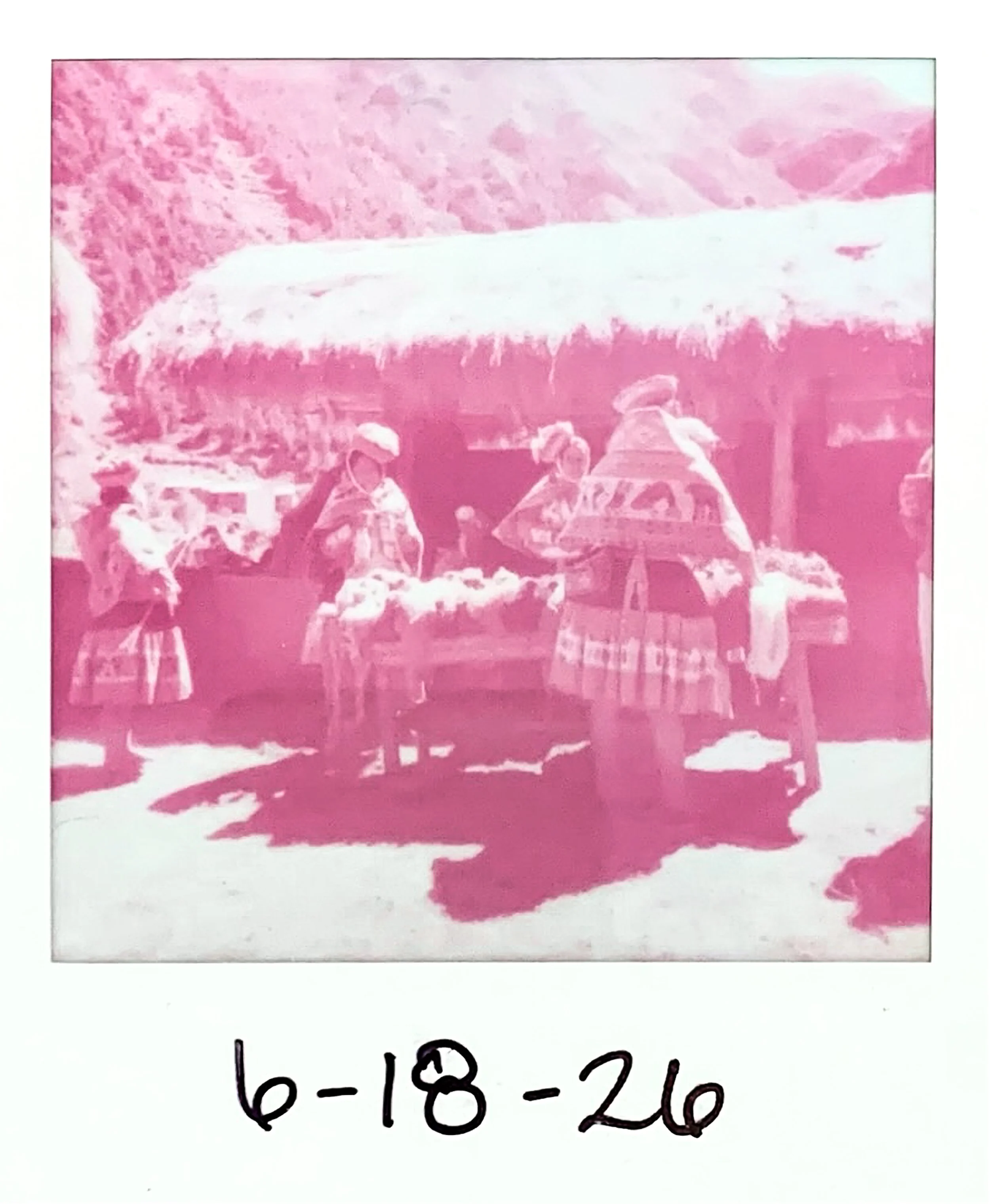
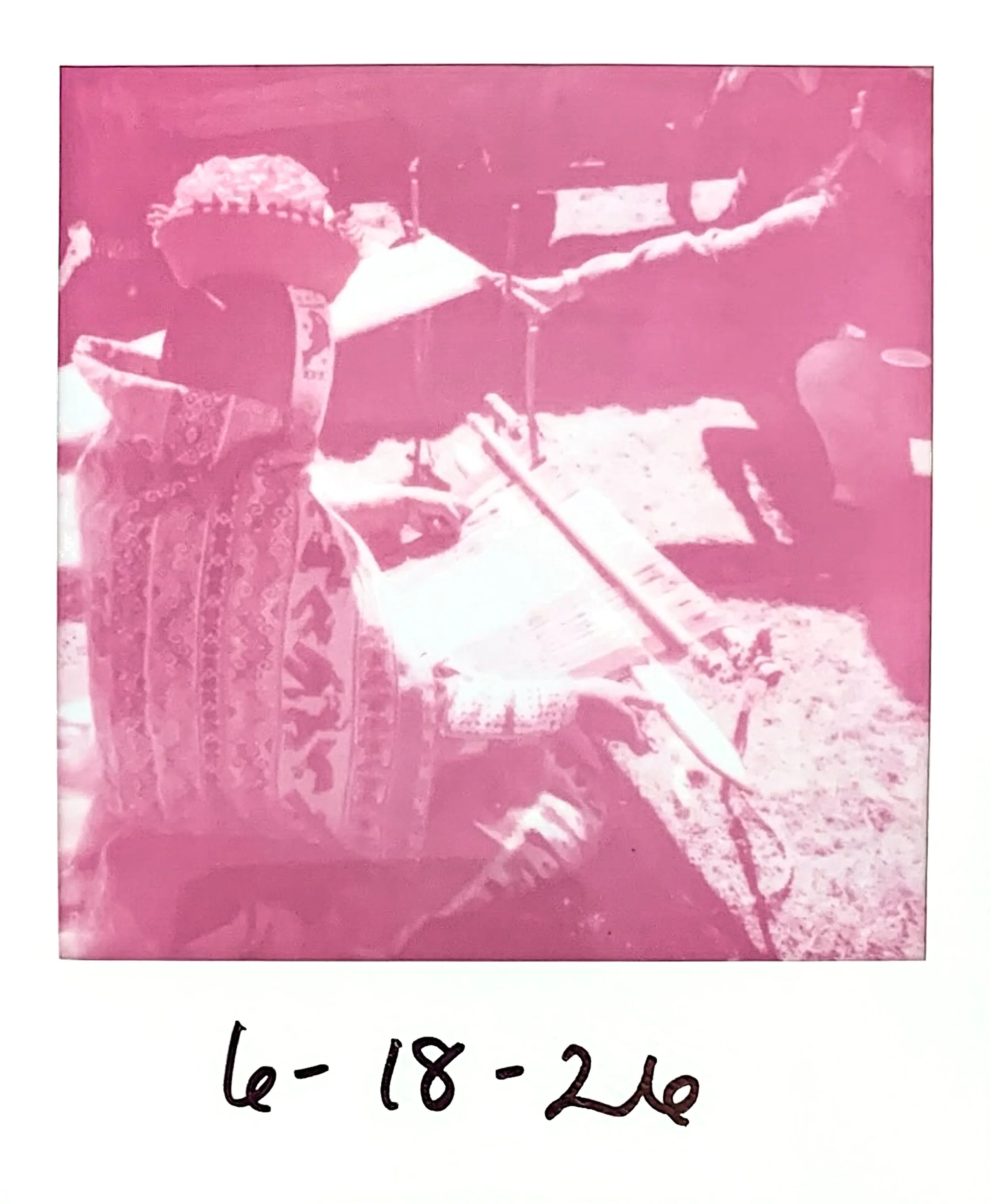
After our spinning session, we learned to weave on the backstrap loom. Virginia and other cooperative weavers helped us choose three colors and wove the first half of a bracelet (pulsera), which set us up to complete the second half ourselves. Although I took Polaroids (which turned pink because of TSA X-rays) during the spinning and dyeing demonstrations, I wanted to be fully present for the backstrap weaving so I could absorb everything Virginia was teaching. We concluded our demonstrations with a homemade meal (I still think about that deliciously seasoned trout) and had the opportunity to purchase textiles before we left. Afterward, our Immersion cohort had some free time to explore Ollantaytambo.
Words cannot fully express the kindness and generosity the female artisans showed us. That evening, I began weaving my journal, 6.18.26-6.19.26, at the hotel. I had many thoughts about my time with the cooperative earlier that day, all of which were captured in the journal, along with items such as the string from the qantu necklace, the itinerary, and the bracelet. But my primary thought was about how Awamaki and the community appreciated and supported the artisans. And not just economic support, but support for their labor-intensive processes and craft. The fact that these female artisans are appreciated and honored for the work they have preserved for centuries —with their labor not downplayed or questioned, and their work not dismissed as "women's work" — is incredible, and something we have not quite overcome here in the States.
When I left Peru, I walked away with a lot of gratitude and thoughts on craft, preservation, legacies, and ancestral knowledge. This was a trip that I will remember for the rest of my life and career, and I hope to visit the cooperative again soon.
From the Journal Series, 6.18.26-6.19.26, 2026
10 x 12 in. (25.4 x 30.5 cm); Handwoven alpaca yarn, flower necklace wool string, itinerary, pen, backstrap-woven bracelet, stickers
Practice and Process
From August 17 to August 23, I attended the High Desert Test Sites (HDTS) Self-Structured Residency. Residencies have always given me a chance to focus, experiment, and reflect, and this one was no different. Situated a little more than 3 miles from the West Entrance of Joshua Tree National Park, I was surrounded by nature, mountains, and twinkling lights in the distance. Since attending the Lunder Institute for American Art and Surf Point Foundation, both in Maine in 2022, I've known that being miles away from Chicago and in a new environment rejuvenates me and my practice. Through experiences like this, I realized I enjoy being in places where things feel accessible yet far enough from the hustle and bustle of everyday life.
Since I drove from Chicago to Joshua Tree, I brought my Schacht Lilli frame loom, a Louet S15 spinning wheel, a Polaroid i-Type camera, fiber roving, and Awamaki’s yarn. With these materials, my residency process was simple: document everything I could. While I was there, I took Polaroids of my time visiting Joshua Tree National Park and the surrounding area of HDTS’s A-Z West Guest Cabin, where I was staying. While exploring the HDTS grounds, weaving, and collecting objects, the first thing I noticed was the quiet. I needed this quiet. This was the first residency I had done since the passing of my grandfather in 2023 and my grandmother in 2024, and since my dad’s two strokes in the Fall and Winter of 2025. This quiet and calm, paired with my love for the weaving and spinning process, allowed me to process. Similarly to the Quechua weavers I met during the Awamaki visit, I was processing what I was feeling, seeing, and needed to understand.
I never design or plan what each weaving will look like; I grab whatever fiber and objects I have on hand and start spinning and weaving until there is no more space to weave. I collected loose tile, rocks, and glass embedded in the sand near the cabin and wove with them. On the Lilli loom, I had woven four journals for the Journal Series. Since 2020, the Journal Series has always been a way for me to take the internal thoughts and feelings of everyday life and externalize them in a tactile, visual way, often using textures from my hand-spun yarns and found materials. The simplicity of plain weave lets me focus on materiality and the inevitable thoughts that arise during the slow pace of going “over under over under” with the tapestry needle, or the repetitive, slow rhythm of the spinning wheel.
Attending HDTS was necessary for me because it let me refocus and create without daily distractions. Making 4 journals and taking over 40 Polaroids of my time there made me excited to keep experimenting with my work, documentation, and archiving.
Select Polaroids from Bibbs’s Polaroid Archive
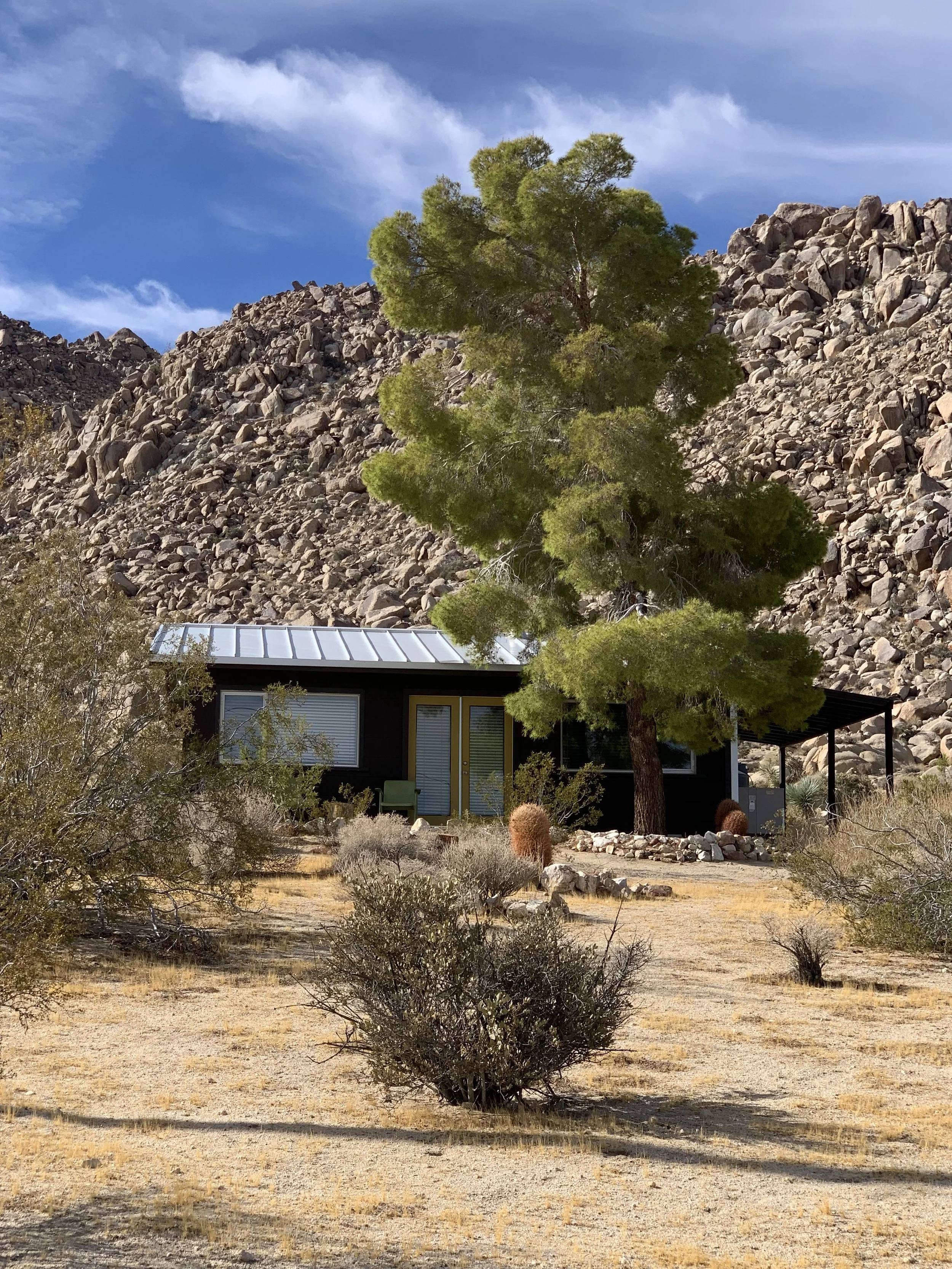
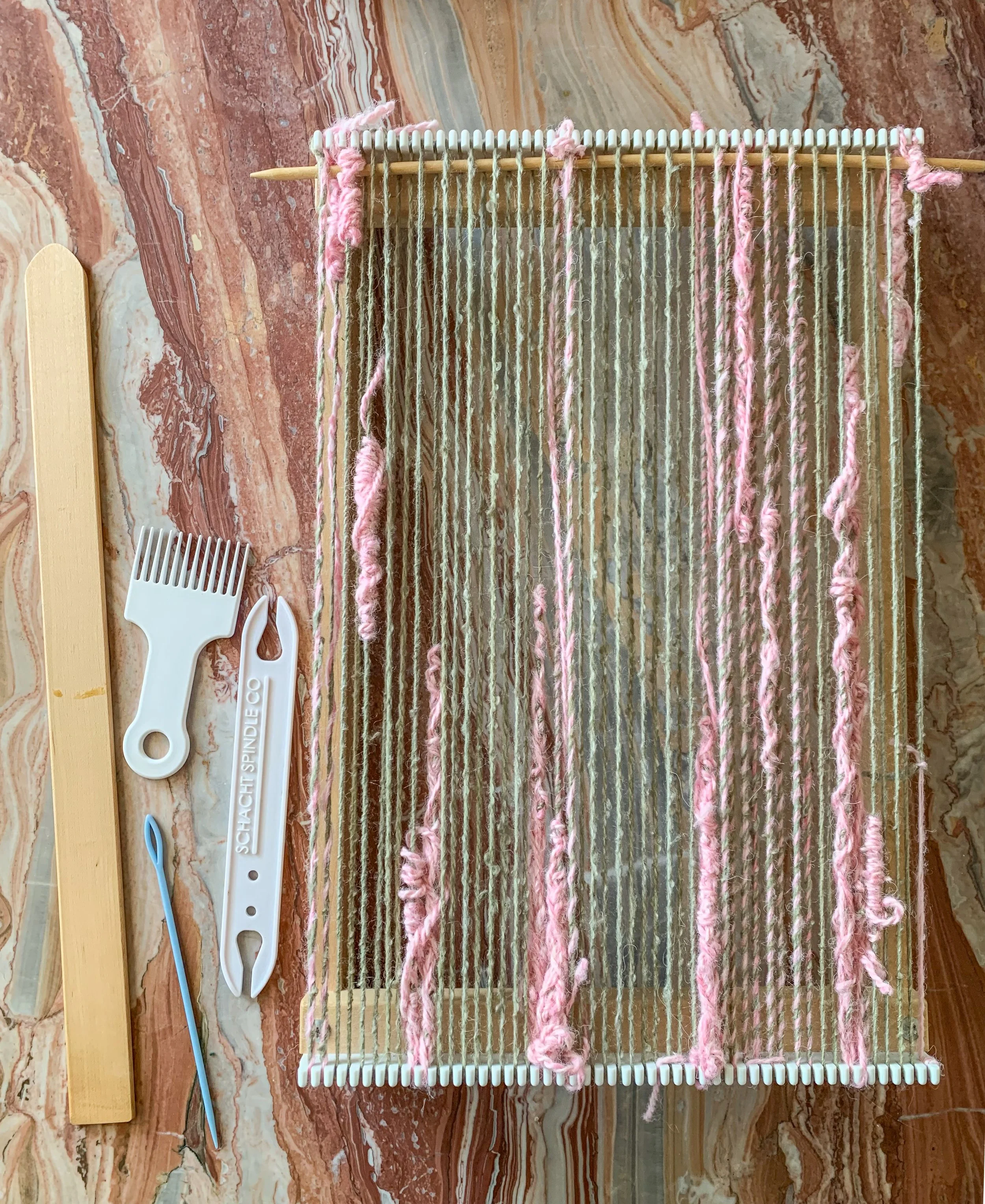
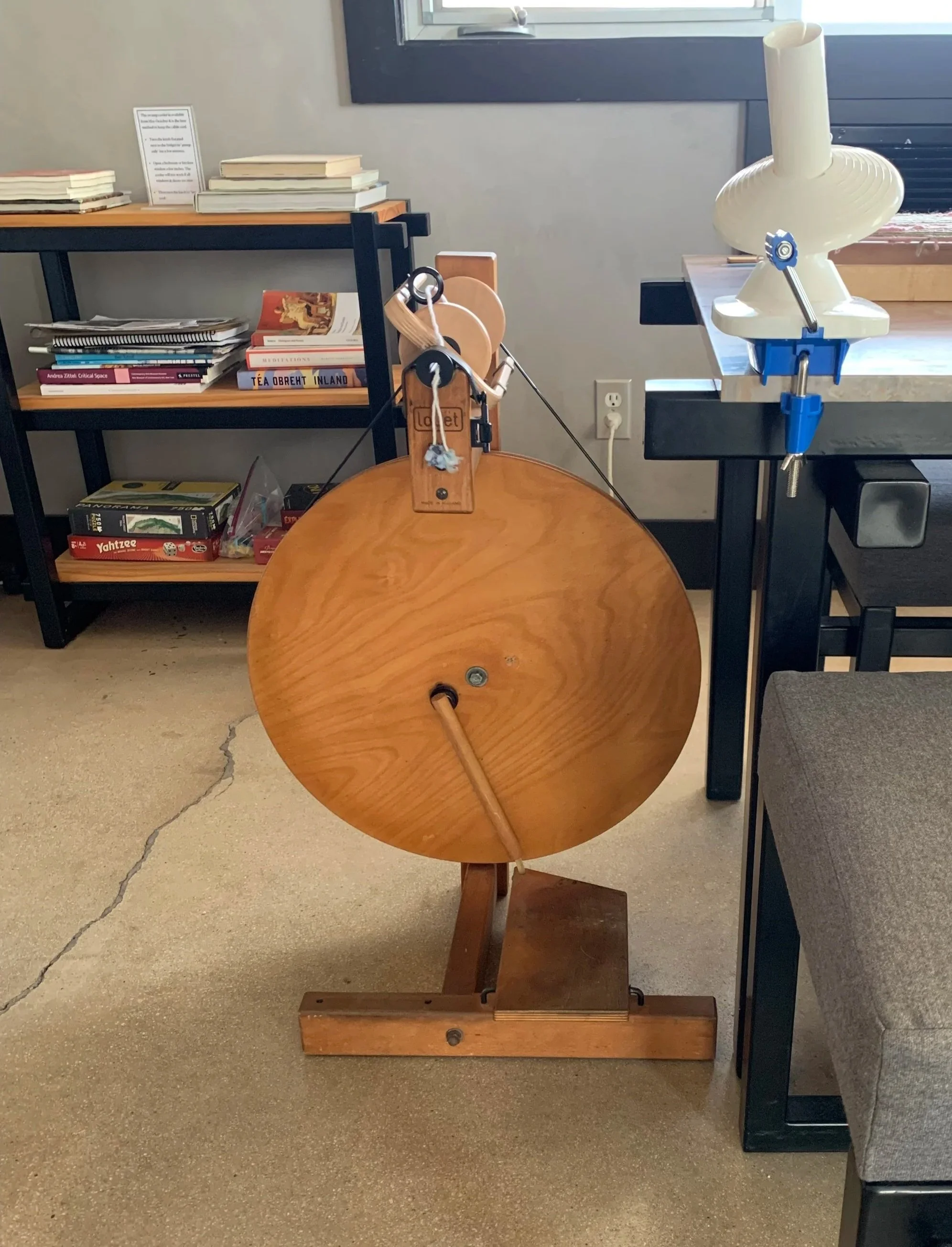
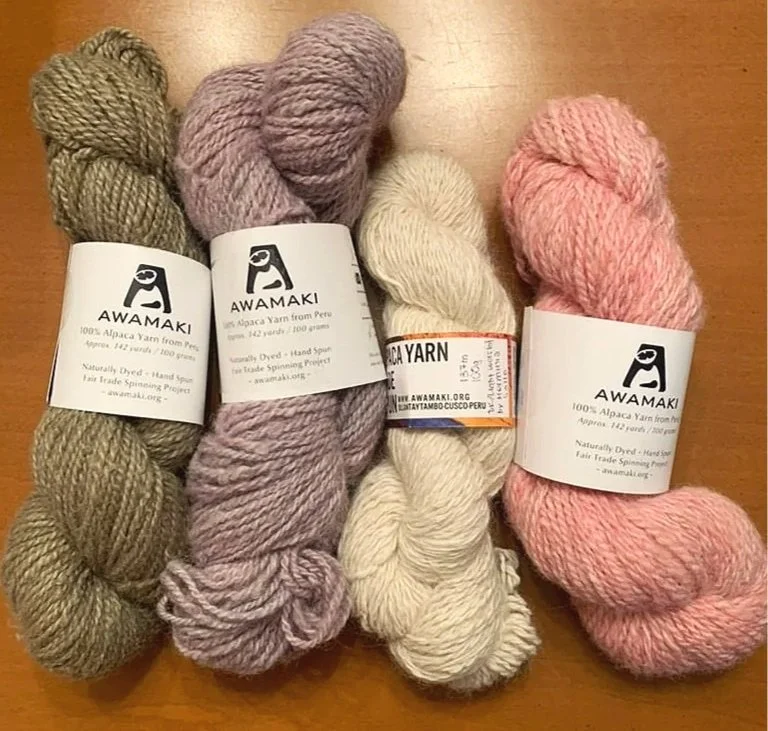
Studio images from High Desert Test Sites, Joshua Tree, California
From the Journal Series:
8.18.26, 2026; 10 x 16.5 in. (25.4 x 42 cm); Handwoven Awamaki alpaca yarn and a Polaroid
8.19.26, 2026; 13 x 16 in. (33 x 41 cm); Handwoven map, Polaroid, Awamaki alpaca yarn, cocktail pick, and hand-carded, hand-spun nylon and bamboo fiber
8.20.26, 2026; 11 x 14.5 in. (28 x 37 cm); Handwoven Awamaki alpaca yarn, Polaroid, broken tile, rocks, and hand-spun nylon and bamboo fiber
8.21.26, 2026; 9.5 x 13.5 in. (24.1 x 34.2 cm); Handwoven Awamaki alpaca yarn, Polaroids, and rocks